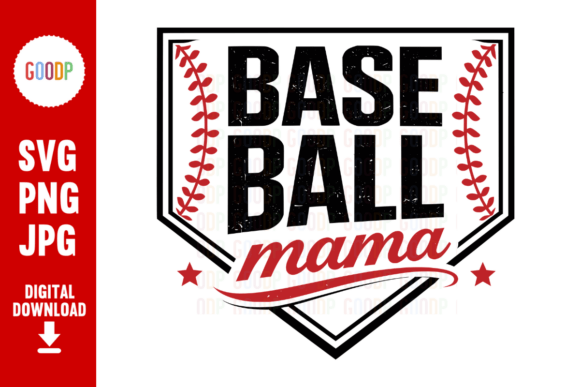
Baseball Mama Home Plate SVG
A Design That Says “I’m Here—and I’m Proud”
First glance at the Baseball Mama Home Plate SVG lands with a warm, confident familiarity—not flashy, not fussy, but unmistakably rooted in real-life fandom. The home plate border isn’t just decorative; it’s structural, grounding the “Baseball Mama” lettering like a dugout bench beneath a proud parent’s feet. As an embroidery designer who’s stitched hundreds of sports-themed pieces for Etsy sellers, boutique shops, and local league families, I immediately sense this isn’t a generic clipart knockoff. It’s got rhythm: balanced weight in the letters, clean curves on the plate outline, and just enough visual breathing room to translate well into thread.
Where It Shines—And Why Customers Reach For It
I recently used the Baseball Mama Home Plate SVG to create embroidered tote bags for a local youth baseball tournament vendor. We stitched them on midweight canvas totes—no lining, no fuss—and the design held up beautifully. The home plate shape gave natural framing for the center hoop, while the lettering sat cleanly within the plate’s inner boundary. Moms loved it instantly—not because it was loud or trendy, but because it felt *true*. That authenticity matters. Whether you’re making sweatshirt embroidery for a coach’s wife, baby embroidery on a onesie (“Future Catcher, Present Mama”), or a custom apron for a concession stand volunteer, this design reads as personal, not promotional.
It works especially well for handmade product lines where cohesion and clarity matter: think curated Etsy listings with matching tea towel + pillow cover sets, or holiday embroidery bundles for Opening Day gifts. As a digital embroidery file, it scales cleanly across sizes—no pixelation, no jagged edges—so your printable mockup looks as sharp as your finished product. And because it’s built around a strong geometric shape (the home plate), it adapts naturally to curved surfaces like caps when resized thoughtfully—not as a primary cap front design, but as a subtle side-embroidery accent or back-strap detail.
Where to Pause—and Test First
Don’t assume it’s foolproof on every fabric. On thin cotton tees or lightweight baby knit, the home plate outline can read as heavy if stitch density isn’t adjusted. I recommend reviewing the fill stitch coverage in the plate itself before stitching—some versions pack more density than others, and over-stuffing that shape on delicate fabric risks puckering or stiffness. Likewise, on stretchy performance blends (common in modern game-day apparel), skip the satin stitch for the outer plate edge unless you’ve added cutaway stabilizer underneath. A running stitch outline often reads cleaner and moves with the fabric.
Small hoop sizes (under 4x4”) need special attention. The full design fits comfortably in a 5x7”, but if you’re adapting it for a child’s cap or a narrow pocket patch, trim the outer plate corners *before* digitizing—not after. Those sharp angles don’t always translate smoothly in dense fill areas. And on dark fabric? Test thread colors against black-and-white mockups first. Some “Baseball Mama” fonts rely on subtle serifs or fine interior spacing that vanish without contrast.
Real Talk for Craft Business Owners
If you’re an Etsy seller or small shop owner building a consistent brand around sports mom themes, this Baseball Mama Home Plate SVG is a smart anchor piece—but only if you treat it as a starting point, not a finish line. Pair it with simple coordinating graphics (a glove icon, a stitched baseball) and keep your color palette tight—navy, cream, cherry red—to reinforce recognition across your listings. Customers remember consistency, not clutter.
For commercial embroidery projects, verify licensing before offering it as part of a custom package. Since it’s categorized under Illustrations and labeled a Graphics asset, confirm whether it permits resale in physical finished products (yes, typically) and redistribution as a standalone digital embroidery file (often no). When in doubt, reach out to the creator—most reputable designers respond quickly and clarify terms.
Design Notes You’ll Actually Use
- Always test on scrap fabric first—especially if using textured weaves like twill or terry cloth. The home plate shape can catch on loops.
- Check thread color contrast on both light and dark backgrounds. Cream thread on navy reads warmly; white on black reads boldly—but both need sufficient stitch definition.
- Review stitch density in the plate’s fill area. If it feels too solid, reduce density by 5–10% for breathable wearables.
- Confirm hoop size compatibility before prepping client files. Most versions sit comfortably in 5x7”, but double-check yours.
- Inspect small details like letter spacing and inner plate corners—they’re easy to miss on screen but show up clearly in stitching.
- Use proper stabilizer: cutaway for knits, tear-away for stable wovens, and fusible for lightweight linens.
- Test black-and-white mockups to assess visual weight and legibility at small sizes—critical for patches or baby items.
Final Thought: It’s Not Just a Graphic—It’s a Moment
The Baseball Mama Home Plate SVG doesn’t try to be everything. It’s not a mascot, not a slogan storm, not a seasonal gimmick. It’s a quiet nod to presence—the woman holding the snacks, timing the innings, and remembering every kid’s batting order. That’s why it works so well across embroidered patch collections, personalized gifts, and small business merchandise: it carries emotional weight without shouting. When stitched cleanly, with care for fabric and thread, it elevates a simple tote bag into a keepsake. A sweatshirt into a uniform of pride. A kitchen towel into a conversation starter at the concession stand.
That’s the mark of good design—not how many trends it follows, but how many real hands it fits.