Root Vegetable Plant Silhouette SVG
A Designer’s First Look: Clean, Calm, and Quietly Confident
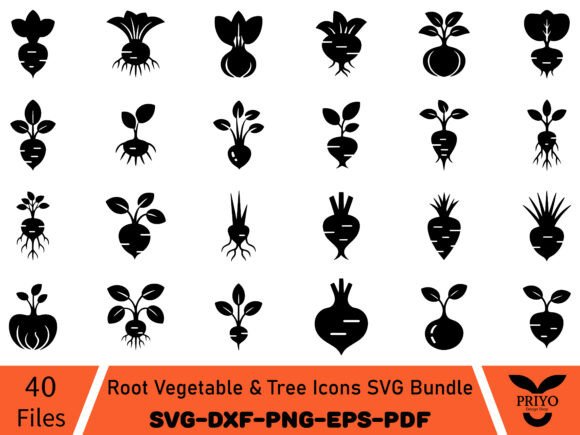
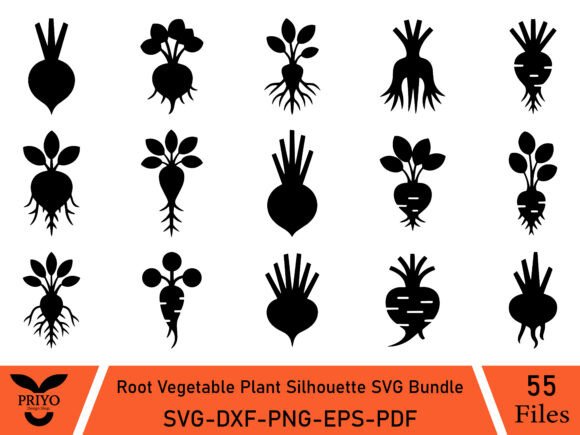
When I opened the Root Vegetable Plant Silhouette SVG, my first thought wasn’t “cute” or “trendy”—it was grounded. The shapes—carrot, beet, radish, parsnip—each rendered as a single, unbroken silhouette with subtle root tangles and leafy tops—are balanced, spacious, and intentionally unhurried. There’s no forced whimsy, no cluttered stems or exaggerated curves. Just quiet botanical clarity. That matters—especially if you’re stitching for a boutique kitchen towel line, a farm-to-table café apron, or a baby onesie meant to feel warm, earthy, and handmade—not cartoonish.
Where It Shines: Real Projects, Real Stitching
I tested the Root Vegetable Plant Silhouette SVG on a linen-cotton tea towel and a midweight organic cotton tote bag—both common staples for craft businesses and Etsy sellers. On both, the design held its shape beautifully in satin stitch outlines with light fill stitch interiors. Because the silhouettes are generous (no tight corners or micro-details), stitch density stayed moderate—no puckering, no thread breakage, even at 8–10 inches wide. That’s a relief when you’re batching 30+ embroidered totes for a local farmers’ market pop-up.
It also translated well into a small-batch embroidered patch set—think 3" diameter circles with one veg per patch, stitched onto denim aprons. The clean edges gave crisp definition without needing heavy backing, and customers responded strongly to the subtle storytelling: “This isn’t just produce—it’s heritage, seasonality, care.” That kind of resonance lifts perceived value on handmade product listings and strengthens brand consistency for small shop owners.
Where to Pause—and Why
The Root Vegetable Plant Silhouette SVG is not built for ultra-fine detail work. If you’re planning embroidery on baby onesies under size 6 months—or stitching directly onto thin, lightweight gauze—the leaf tips and fine root filaments may lose clarity. Likewise, on highly textured fabrics like bouclé or thick terry cloth, those delicate negative spaces can disappear unless you adjust stitch type (e.g., switch from fill to running stitch for outlines) or add a light tear-away stabilizer underneath.
For caps or curved surfaces? Proceed with caution. The design’s horizontal orientation and slight asymmetry mean centering requires careful hooping—and testing on scrap fabric first is non-negotiable. Also, avoid placing it near seams or high-stretch zones (like underarm panels on sweatshirts) unless you’ve confirmed how the fabric reacts with your machine’s tension settings.
Dark Fabric? Light Fabric? Know the Contrast
I ran quick mockups in black and white: on charcoal heather sweatshirts, navy tea towels, and ivory linen. The silhouette works best with strong thread color contrast—deep olive, burnt sienna, or charcoal gray thread against light backgrounds; cream or pale yellow against darks. Avoid pastel-on-pastel pairings unless you’re using a dense fill stitch or adding a subtle shadow layer (which this SVG doesn’t include). As an Illustrations asset, it’s elegant—but it’s not self-enhancing. Its impact relies on thoughtful execution.
Commercial Use & Craft Business Reality Checks
If you’re an Etsy seller or digital product creator, remember: this is a Graphics file—not a pre-digitized embroidery file. You’ll need to convert it yourself or hire a digitizer. That means checking stitch count, underlay strategy, and pull compensation before sending it to your machine. Don’t assume “SVG” = ready-to-embroider. For commercial embroidery projects, always confirm licensing terms—some bundles allow resale of finished items but prohibit redistribution of the digital file itself.
For personalized gifts—say, a holiday kitchen towel set monogrammed with a family name + one root vegetable—the Root Vegetable Plant Silhouette SVG pairs cleanly with simple block fonts. No visual competition. No overwhelming busyness. Just warmth, intention, and a quiet nod to real food and real hands.
Practical Notes Every Embroidery Designer Should Keep Handy
- Test first—always on scrap fabric matching your final project’s weight and stretch.
- Check thread color contrast in natural light—not just on screen—before stitching 50 units.
- Review stitch density if scaling beyond 10 inches; large fills can shift fabric grain.
- Confirm hoop size early—this design flows horizontally, so a 5x7 hoop may require repositioning for centered placement.
- Inspect small details like root tips at 150% zoom in your embroidery software—do they hold integrity?
- Mock it up in black and white to assess silhouette strength before choosing thread.
- Compare light/dark backgrounds side-by-side—what reads clearly on ivory may vanish on slate.
- Use proper stabilizer: cutaway for knits, tear-away for stable wovens, no-show mesh for sheer layers.
- Verify dual-use rights—can you sell the finished embroidered tote and offer the SVG as a digital download? Read the license.
Final Thought: Not Just a Design—A Design Choice
The Root Vegetable Plant Silhouette SVG won’t shout. It won’t go viral overnight. But it will earn repeat orders from customers who value authenticity over algorithm-chasing trends. It fits seamlessly into sustainable branding, slow-made product lines, and thoughtful gifting—whether that’s a custom embroidered pillow cover for a new kitchen, a set of nursery wall patches, or a small shop’s signature tote bag. In a market flooded with flashy, over-digitized graphics, this one breathes. And in embroidery—where every stitch carries weight, texture, and time—that kind of calm confidence is rare. And valuable.