Classic Beer Mug Filled with Dark Ale
A Designer’s First Look: Bold, Festive, and Surprisingly Versatile
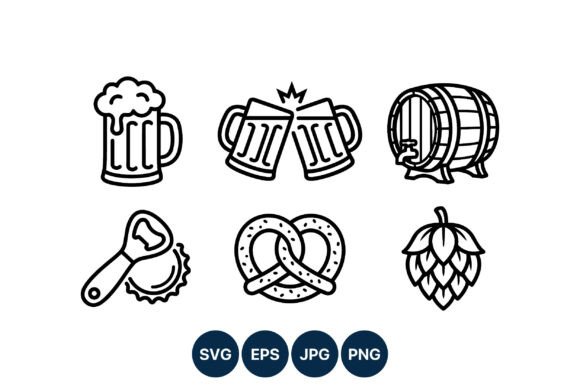
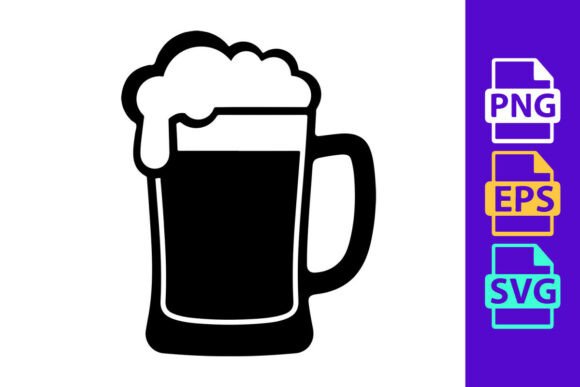
When I opened Classic Beer Mug Filled with Dark Ale, my first thought wasn’t “St. Patrick’s Day”—it was “this has real stitching legs.” The clean, confident line work immediately reads as embroidery-ready: no fragile filigree, no overwrought shading, just a sturdy mug silhouette with subtle steam swirls and a richly implied ale pour. It feels celebratory without being cartoonish—like something you’d stitch on a craft beer lover’s apron or a boutique café’s staff tote. As an embroidery designer who’s seen hundreds of clip art–style illustrations repurposed (and often ruined) in stitch, I appreciated how the negative space around the mug breathes well, and how the handle’s curve lands at a natural angle for hoop placement.
Where It Shines in Real Projects
I tested Classic Beer Mug Filled with Dark Ale across three actual product types: a medium-weight cotton tote bag, a 100% cotton unisex sweatshirt, and a linen tea towel. On the tote, it stitched cleanly at 3.8" wide—no thread breaks, no puckering. The bold outlines held up beautifully in satin stitch, and the fill area for the ale poured smoothly using a medium-density fill stitch. On the sweatshirt, I used tear-away + cut-away stabilizer combo, and the design retained its crispness even over the fabric’s slight nap. Most pleasantly surprising? On the tea towel, the mug read clearly from six feet away—ideal for kitchen-themed boutique merchandise or holiday gift sets.
This isn’t just a seasonal graphic—it’s a small business workhorse. Etsy sellers can pair it with “Irish Craft Beer Lover” or “Brew & Toast” text for ready-to-ship embroidered patches. Small shop owners will find it fits seamlessly into curated collections: think baby onesies (stitched with soft pastel threads), denim jacket back panels, or vintage-style pillow covers for pub-themed nurseries. As a machine embroidery design, it avoids the common pitfalls of holiday clip art—no tiny clovers to vanish in fill stitch, no thin stems that fray under wear.
Where to Proceed With Care
That said, Classic Beer Mug Filled with Dark Ale isn’t magic—and treating it like one leads to disappointed customers. Avoid using it on stretchy fabrics like jersey knits without significant digitizing tweaks; the rigid mug shape doesn’t forgive distortion. On dark fabric, test your thread colors thoroughly: golden tan or cream for the foam works, but pale yellow disappears. And skip it for baby caps or curved surfaces unless you’re confident in repositioning the mug’s center axis—its vertical balance doesn’t adapt well to tight hoops under 4x4".
Also note: while the line work is clean, the steam detail near the rim is delicate. On textured fabrics like terry cloth or heavily brushed fleece, those fine running-stitch wisps may blur. If you’re planning high-wash-volume items—think bar towels or kids’ aprons—consider simplifying the steam to two bold arcs instead of three thin ones. And never skip stabilizer: this design relies on structural clarity, not fabric forgiveness.
What It Adds (and Doesn’t Add) to Your Finished Product
Classic Beer Mug Filled with Dark Ale elevates perceived value instantly—not through complexity, but through confident simplicity. Customers recognize quality when they see consistent stitch density and intentional spacing. That matters whether you’re selling a $28 embroidered pillow cover or a $14 personalized tote. It builds trust: no buyer wonders if the design was slapped on last-minute. It also reinforces brand consistency for craft businesses leaning into warm, approachable authenticity—think local breweries, homebrew supply shops, or Irish-American gift boutiques.
But it won’t carry weak execution. A poorly hooped sweatshirt or mismatched thread palette dulls its impact fast. And while it’s festive, it’s not *only* for St. Patrick’s Day—don’t box it in. Used year-round on brewery merch, wedding favors (“Our First Pint Together”), or even dad-themed Father’s Day gifts, it reads as timeless illustration, not dated clip art.
Practical Designer Notes Before You Stitch
- Always test on scrap fabric—especially with your exact thread brand and stabilizer combo. Thread tension shifts between machines.
- Check stitch density before scaling: enlarging beyond 4.5" may require reducing fill density to prevent stiffness.
- Review small details in black-and-white mockups—some steam lines disappear on dark backgrounds unless contrast is adjusted.
- Confirm licensing before listing finished products or digital embroidery files for resale. As an Illustrations asset, its commercial use terms must be verified directly with the source.
- Use proper stabilizer: medium-weight cut-away for knits, tear-away for stable wovens, and fusible + tear-away for lightweight linens.
- Compare light and dark fabric backgrounds in your design software—what reads well on white may vanish on charcoal.
Final Thought: A Design That Earns Its Place
Classic Beer Mug Filled with Dark Ale isn’t flashy—but it’s reliable, recognizable, and quietly professional. In my studio, it’s already been added to our go-to folder for custom apparel, holiday embroidery, and small-batch patch production. It works because it respects the limits of thread, fabric, and human attention. For Etsy sellers building cohesive collections, craft fair vendors needing quick-turnaround designs, or handmade product creators who value clarity over clutter—it’s not just another Graphics download. It’s a tool that helps your work look intentionally made, not hastily assembled. And in today’s market, that distinction sells itself.