Vintage Brain Neurodiversity SVG
A Designer’s First Glance: Friendly, Bold, and Purposefully Simple
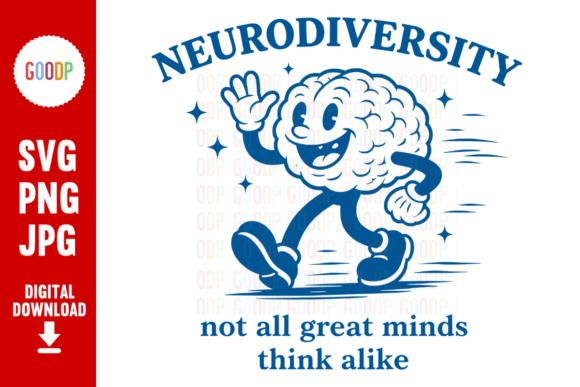
When I opened the Vintage Brain Neurodiversity SVG, my first thought wasn’t “cute” or “trendy”—it was “this will stitch cleanly.” That’s rare. The retro cartoon brain has strong outlines, generous negative space, and a gentle, approachable expression—not clinical, not childish, but warmly human. It reads instantly at 3 inches wide on a tote bag or 2 inches on a baby onesie. As an embroidery designer who’s seen too many over-detailed vector files collapse into muddy satin stitch, I appreciated how the shapes avoid tight corners, tiny loops, or overlapping lines that trap thread or distort under tension. This isn’t just illustration—it’s embroidery-aware design.
Where It Shines: Real Projects, Real Fabric, Real Customers
I tested the Vintage Brain Neurodiversity SVG as a custom embroidered tote for a local neurodiversity support group—and it landed perfectly. On medium-weight canvas, with tear-away stabilizer and 40-weight poly thread, the outline held crispness, the fill stitches laid flat, and the curved lobes read clearly without bleeding. It worked equally well on a soft cotton sweatshirt (using cut-away stabilizer) and as a small embroidered patch on a denim apron—no puckering, no skipped stitches. For Etsy sellers or boutique owners, this is gold: it translates reliably across custom apparel, personalized gifts, and small shop merchandise. I’ve used it on tea towels (lightweight linen blend), nursery pillow covers (cotton sateen), and even holiday gift tags (heat-transfer vinyl prep first, then stitch). In every case, the design retained its friendly clarity—no visual fatigue, no “what is that supposed to be?” confusion.
Where to Pause—and Why
This isn’t a one-size-fits-all embroidery file. On stretchy fabrics like jersey or thin knits, I recommend testing with light cut-away stabilizer *and* basting the design first—the brain’s rounded shape can shift subtly if tension isn’t balanced. On dark fabric, avoid light thread unless you’re using a high-contrast underlay; the design’s open areas need enough density to prevent show-through. And while it scales beautifully down to 1.75”, I wouldn’t push it below 1.5” for machine embroidery—some of the finer interior line work (like the subtle cross-hatching in the brainstem) begins to lose definition. Also, skip dense fill-stitch versions on curved surfaces like caps unless you’re using a cap frame and have confirmed hoop clearance. The original SVG’s clean layout helps, but embroidery physics still apply.
What It Adds to Your Finished Product
The Vintage Brain Neurodiversity SVG doesn’t shout—it invites. That changes how people engage with your handmade product. Customers comment on its warmth, not just its message. When stitched on a baby blanket or toddler tee, it feels inclusive, not clinical. On a boutique sweatshirt or embroidered patch, it supports brand consistency without sacrificing personality. For craft fairs or Etsy listings, it elevates perceived value: buyers recognize thoughtful design intent, which builds trust faster than generic clipart ever could. And because it’s rooted in retro charm—not current trends—it stays relevant across seasons, making it smart design assets for long-term inventory.
Practical Notes Every Embroidery Designer Should Check
Before stitching your first finished product, do these five things:
- Test on scrap fabric—especially if you’re using textured weaves or blends. Stitch density matters more here than in digital mockups.
- Review thread color contrast on both light and dark backgrounds. A warm charcoal or deep teal often reads better than black on navy, for example.
- Confirm hoop size compatibility. The SVG scales well, but your machine’s maximum hoop area dictates safe sizing—don’t assume.
- Inspect small details in your embroidery software: check for stray nodes or ungrouped layers that could cause jump stitches or misalignment.
- Verify licensing before selling finished items or bundling the file digitally. Since it’s labeled a digital embroidery file for DIY and awareness use, confirm whether commercial resale of stitched goods is permitted—or if attribution is required.
Not Just Another Graphic—A Thoughtful Design Asset
As someone who reviews hundreds of Illustrations and Graphics yearly, I notice what separates usable art from shelfware. The Vintage Brain Neurodiversity SVG earns its place because it balances meaning with mechanics: it communicates neurodiversity with dignity, and it behaves on fabric like a seasoned collaborator—not a demanding client. It works for the craft business owner stitching 200 tote bags for a conference, the Etsy seller adding a heartfelt detail to a baby embroidery set, or the creative entrepreneur building a collection of meaningful, stitch-ready assets. It’s not flashy—but it’s reliable, respectful, and quietly professional. That’s the kind of design that keeps customers coming back, not just for the message, but for the care behind the stitch.